Get a quote and timeline for your hire
BestHeads is a Kyiv-headquartered IT recruiting agency that runs IT searches for US and European tech companies. We are not an outstaffing provider, not a freelance marketplace, and not a body-shop. Every hire we place joins your company on your contract, your payroll structure, and your IP terms.
The reason clients hire us instead of running searches in-house comes down to two things: stack depth and screening discipline.
Stack depth. We do not source across every IT role on the market. We work the stacks where Ukraine has a meaningful supply of strong engineers and where finding them requires more than posting on Djinni – Rust, Embedded C and C++, Go, Python, DevOps, blockchain (Solidity, Substrate), Unreal Engine, and architect-level roles up to CTO. We maintain active relationships with the local communities around these stacks. When a brief comes in, our recruiters already know which engineers to call before opening a single job board.
Screening discipline. Every candidate we present has been through three internal stages: recruiter screening against the specific brief (experience verification, seniority calibration, current status check), an English level check on a live conversational call with explicit flagging of borderline cases, and a motivation interview covering salary expectation, notice period, contract preference, and any non-negotiables. For clients who need a deeper technical pre-filter before their own engineering team interviews, we offer technical depth screening by a domain expert from our network as a separate paid service. We do not forward cold sourcing results — what lands in your inbox is candidates we believe would close.
The engineer you hire through us becomes your employee, on your payroll or contract, with direct equity and IP arrangements. This is the structural difference from outsource providers. Their model places engineers as long-term contractors on the vendor’s payroll, optimized for fast scaling of hourly capacity. Our model is direct, permanent employment, optimized for long-term retention and team ownership. Both are valid for different scenarios – the comparison table below shows where each fits.
| BestHeads | Lemon.io / Mobilunity / Talmatic | |
|---|---|---|
| Engagement model | Retained search | Contingency or hourly contract |
| Employment relationship | Direct employment with your company | Vendor-employed contractor placed on your project |
| Payment structure | Engagement fee at start + balance at offer signature | Monthly hourly markup on the engineer’s rate |
| Long-term cost over 24 months | One-time placement fee | Continuous markup compounding each month |
| Equity and IP rights | Direct to your company | Routed through vendor agreement layer |
| Free replacement guarantee | 90 days, included | Similar guarantees typically apply |
| Best fit | Permanent core team where ownership and retention matter | Burst capacity, short-term projects, flexible scaling |
The honest summary: if you are scaling a team for a 3-6 month project and need to flex headcount up and down, outstaffing is the better model and we will tell you so on the intake call. If you are building a permanent engineering team where the people you hire today will still be on your payroll three years from now, recruitment is the model — and that is the work we do.
A note on seniority. The majority of our placements over the past two years have been Middle and above, with a meaningful share of Lead, Architect, and C-level searches. We do work Middle-level roles for selected stacks (Rust Middle, Node.js Middle, Unreal Middle) where market supply at Middle is genuinely scarce. We do not work on junior or entry-level positions.
A note on volume. A typical recruiter on our team runs 3 to 7 concurrent searches. We deliberately keep this number lower than industry average to maintain screening quality. Volume agencies that run 20+ briefs per recruiter cannot run the kind of structured screening that produces strong shortlists, which is why their CVs often feel interchangeable.
Filled Roles and Timelines
We found more than an engineer – a specialist who combines deep expertise in radiophysics, circuit design, and embedded programming. The role involves designing complex Electronic Warfare (EW) systems from scratch, working with live RF hardware, and field-testing solutions. The role requires relocation and a high level of autonomy, technical depth, and systems thinking.
We weren’t just looking for a senior engineer or a lead – we needed a real builder. Someone who thinks not just in code but in categories: “will this work for real users,” “is there a product angle here,” “does this fit the tokenomics we’re testing.”
We found a leader who understands deep blockchain architecture and sees the business through the lens of tokenomics, market constraints, and regulation.
Boosters is an international IT company specializing in affiliate marketing and media buying in high-margin verticals. Areas of focus include: building partner networks in gambling and betting, optimizing ad campaigns across Tier 1/2/3 markets, deploying traffic analytics systems to boost performance, and building long-term relationships with international partners and advertisers.
SolveCare (TuumIO) is an international product company building Web3 solutions in healthcare. The company has offices in the US, Ukraine, Hungary, Estonia, South Korea, and India. The particular challenge: the candidate had to be at team lead level — able to mentor the team and partner with international product and design teams while ensuring solution stability and scalability.
Skyvia is a no-code cloud data integration platform by Devart, in operation since 2014. Within a single service it brings together data integration and synchronization, process automation, backups, data access via SQL and OData, and 200+ ready-to-use connectors to SaaS applications, databases, and storages, with no local installation.
Promtys [promtys.com] is a platform that helps businesses build effective workflows with LLMs and prompts.
KEDO ARC is an ambitious gamedev studio building its own game projects on Unreal Engine for the international Steam market. The owner was looking for an experienced developer to own the technical side of executing on the vision and help raise the game to a high level of polish.
Ringostat [ringostat.com] is an AI platform for business telephony and marketing analytics that brings communications, sales, and analytics together in one system.
Darnitsa is a leading Ukrainian pharmaceutical company with 90 years of experience, producing 180+ medicines focused on cardiology, neurology, and pain management. Products are sold in 20+ countries. Production facilities are GMP-certified to Ukrainian, EU, and Australian standards.
Freeje (Poland) is a virtual telephony provider offering virtual numbers, SMS, and SIMs across 90+ countries. The service is available through mobile and desktop apps and a Telegram bot, and the platform supports SIP forwarding, IVR, OTP verification, and crypto-friendly payments.
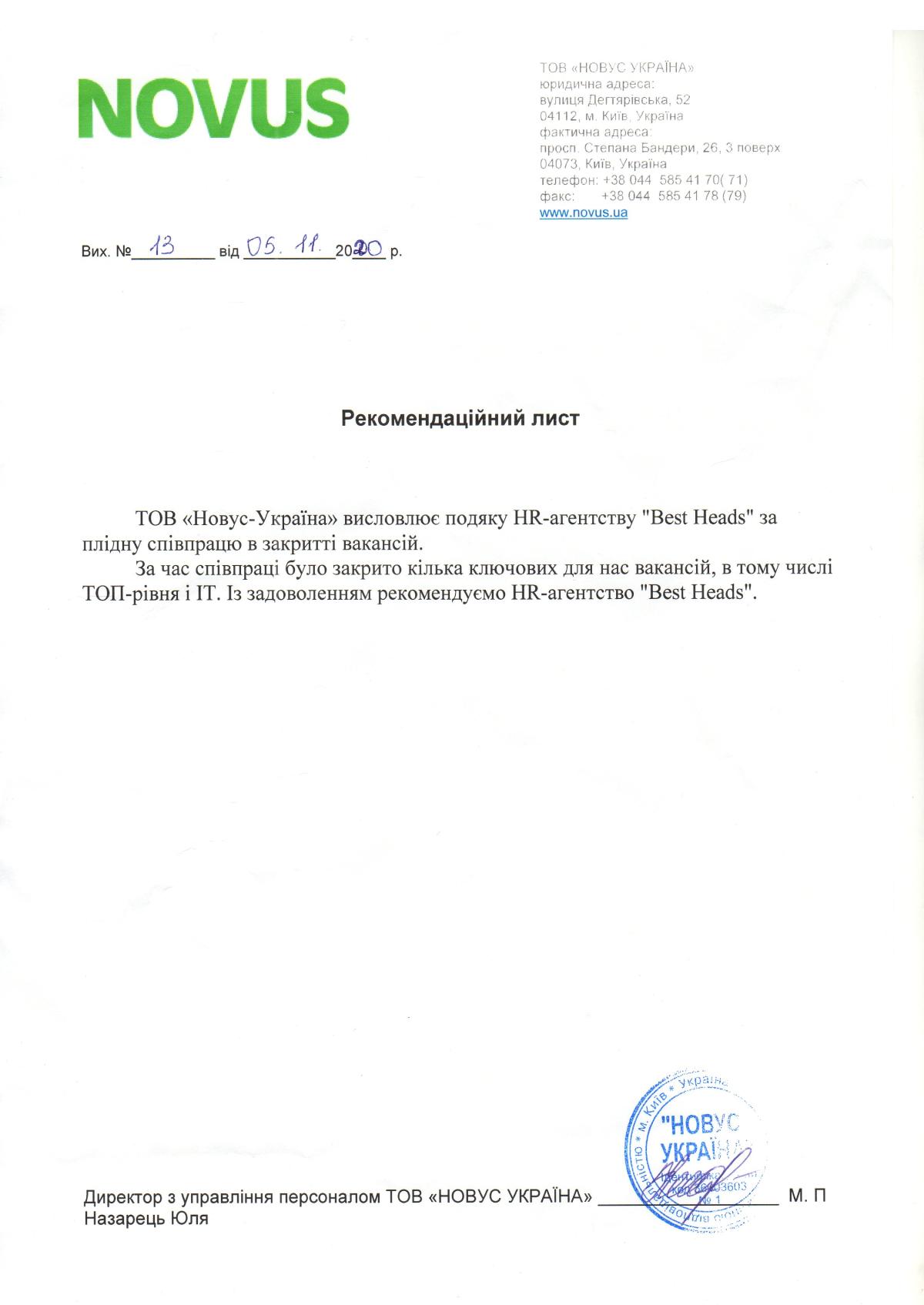
NOVUS is one of Ukraine’s largest grocery retail chains with 80+ stores and a fast-growing online business. The Marketing Director owns the entire e-commerce direction: UX, assortment, pricing, logistics, and IT infrastructure. The challenge is amplified by competition with national online retail players. The hire needed deep understanding of the grocery e-commerce market, specifically in retail.
TMetric is a time tracking SaaS by Devart for service teams and SMBs, used by over 10,000 companies. The platform connects automated time tracking with billing, invoicing, project profitability, payroll, timesheets, and time-off management, with web, desktop, mobile, and browser extension clients and 50+ integrations, including Jira, Asana, QuickBooks, Notion, Trello, GitHub, and Slack.
A defense-sector manufacturer of radioelectronic equipment. The role called for a full-cycle development engineer – from soldering SMD components and working with antenna-feeder systems to programming microcontrollers and supporting products on the production line. A narrow profile at the intersection of hardware radioelectronics and embedded development
SolveCare (TuumIO) is an international product company building Web3 solutions in healthcare. We closed the Senior IT Recruiter role. We were looking for an experienced specialist with fluent English, deep IT market understanding, capable of independently building the hiring process and partnering with management. The challenge: a high bar on both soft and hard skills, Western-level quality expectations, and full autonomy in the role.
Toldora is a Canadian company providing digital solutions in VoIP, tech support, and infrastructure engineering for the international market. The key challenge in closing the VoIP System Administrator role was the scale — the system supported 400+ operators simultaneously. That required someone with experience in high-load environments where even a brief outage can mean significant losses. Nine servers ran 24/7 in production, and the administrator had to ensure stability, uninterrupted call routing, reliable SIP connections, and infrastructure security. This level of complexity demanded not just technical preparation but hands-on experience with large-scale operations, where VoIP isn’t a supporting service but a business-critical function.
Wayrent is a global online car rental platform offering customers a wide selection of vehicles from economy to premium models, with transparent terms and easy booking, and giving fleet owners efficient tools for fleet management and monitoring. Finding a PPC specialist with travel industry experience, deep Google Ads knowledge, analytical skills, and the ability to deliver high ROI in a competitive segment was especially challenging and interesting due to the combination of technical and industry requirements.
Anthill is a Belgian IT company specializing in the development of modern web and mobile applications, as well as blockchain-based solutions. The company employs more than 60 specialists who have delivered hundreds of projects for clients around the world.
CHI Software is an international tech company specializing in building cutting-edge solutions for web and mobile platforms. Since its founding in 2006, the company has expanded its global footprint with offices in Ukraine, Japan, Poland, Spain, the US, and Cyprus, and continues to grow with 800+ specialists.
DEKA is one of the largest Ukrainian online stores for watches and jewelry, with a catalog of 10,000+ SKUs and a complex technical infrastructure built on PHP/Laravel.
Mates Marketing has been operating since 2011 and is headquartered in Chicago. The company specializes in lead generation, traffic acquisition, and building marketing strategies for home improvement businesses in the US market. Because of the complexity of the technical infrastructure, the high load, and the need to ship new features quickly, the company is critically dependent on experienced frontend developers.
Protectimus [protectimus.com] is a B2B multi-factor authentication (MFA) provider. Cloud and on-premise platforms protecting employees, customers, and corporate data, with support for various one-time password delivery methods.
KEDO ARC is an ambitious gamedev studio building its own indie projects on Unreal Engine for the international Steam market. We successfully closed the search for an experienced 3D Generalist with deep understanding of indie development and a strong portfolio — someone to own the full asset creation cycle and visually bring the team’s ideas to life.
Revona Properties is a real estate company offering apartment rentals in Brooklyn, Queens, Staten Island, and Manhattan in New York. To improve customer service and deliver modern digital solutions, the company was building and maintaining a mobile iOS app.
Revona Properties is a leading real estate company offering apartment rentals in Brooklyn, Queens, Staten Island, and Manhattan in New York. To improve customer service and deliver modern digital solutions, the company was building and maintaining a mobile app.
SolveCare (TuumIO) is an international product company building Web3 solutions in healthcare. The company has offices in the US, Ukraine, Hungary, Estonia, South Korea, and India.
eSputnik is an omnichannel Customer Data Platform for e-commerce and retail, used daily by around 3,500 brands. It unifies customer data into a single profile and orchestrates communication across every channel at once — Email, SMS, web and mobile push, Viber, Telegram, In-App, App Inbox, and pop-ups. At the core of the product sits a proprietary AI layer — product recommendations, predictive segmentation, and content optimization, alongside an emerging AI agents direction.
TheRaven is a Ukrainian IT company actively building innovative solutions in blockchain and Web3. The company offers a full cycle of services for building decentralized applications (dApps), launching DeFi projects, and running IDO/INO campaigns. The team specializes in modern Web3 solutions focused on scalability, security, and improved digital user experience. To support this area, we successfully found a Java developer responsible for smart contract integration, processing large data volumes, and implementing complex logic in the backend of blockchain solutions.
OsWorkshop is an international IT company specializing in building Drupal-based web solutions and mobile apps. The team builds corporate sites, e-commerce platforms, and ERP systems for mid-sized and large businesses. Clients include international organizations and brands such as Local 180, NARGS, MedTech Views, and Kebony.
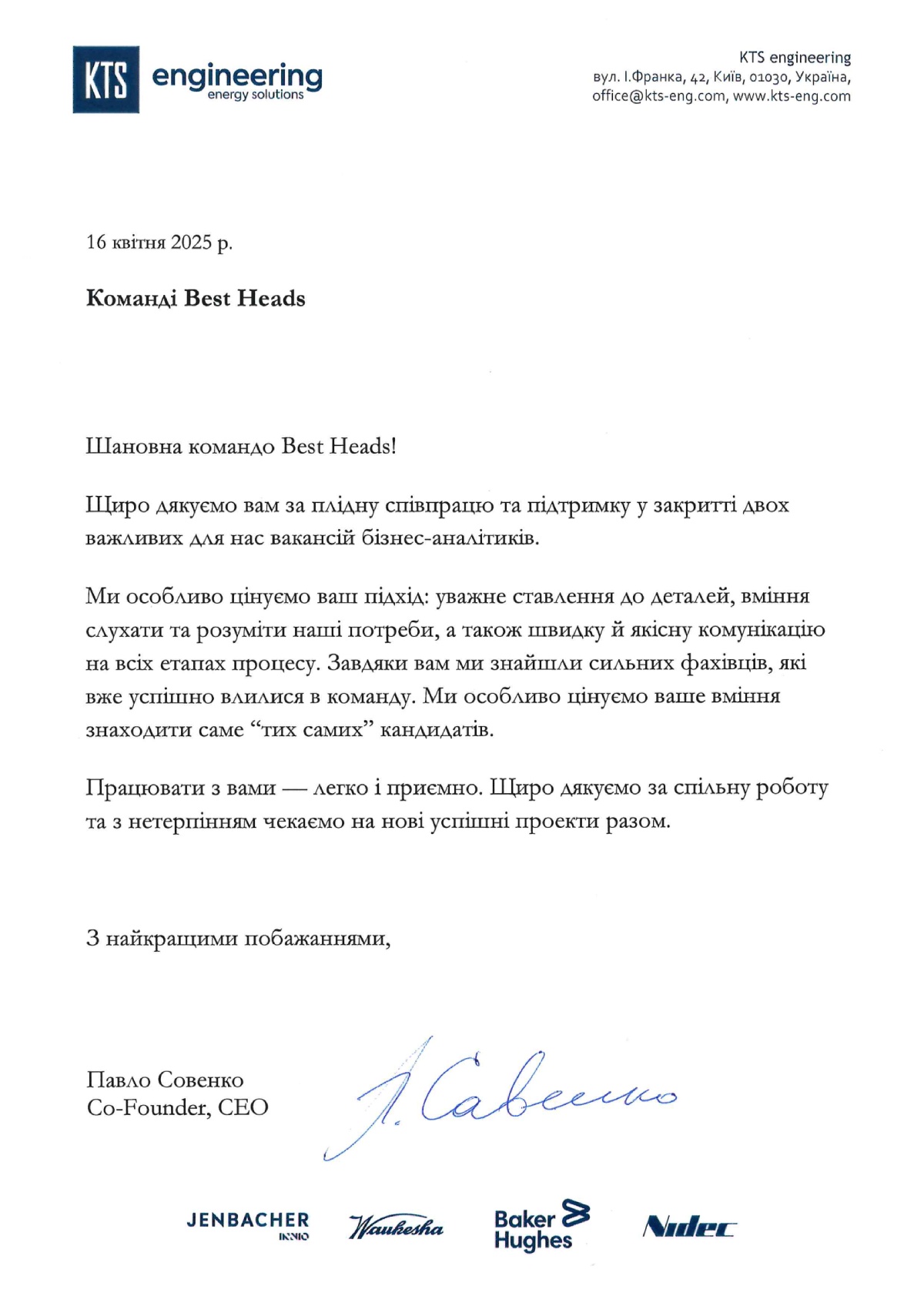
KTS Engineering is an international engineering company with more than 20 years of experience in the energy sector. It is an official partner of INNIO Jenbacher, INNIO Waukesha, Nidec Leroy-Somer, and Baker Hughes. The company specializes in the design, supply, installation, and maintenance of power equipment, in particular gas engines, turbines, and generators. It has offices in Austria, Slovakia, Uzbekistan, and Ukraine, and has delivered Europe’s largest biogas complex, with a capacity of 26.1 MW.
Darnitsa is a leading Ukrainian pharmaceutical company with 90 years of experience, producing 180+ medicines focused on cardiology, neurology, and pain management. Products are sold in 20+ countries. Production facilities are GMP-certified to Ukrainian, EU, and Australian standards.
Miraton is a Ukrainian fashion retailer with a strong store network and online sales, investing heavily in digital. The role owns full P&L for digital strategy, online sales, and all promotion channels (Google Ads, social media, email, SEO). Key challenges: managing the online marketing team, a large budget, and growing the e-commerce platform with a focus on conversion, functionality, and digital campaign effectiveness. Achieving the goals requires hands-on performance marketing experience, strategic thinking, and a systematic approach to digital operations.
K&Z Design is a multi-year Clutch Top UX agency that works as an embedded product design department for SaaS, web, and mobile products. Over 7+ years the team has delivered 50+ projects, running full-cycle design – from research to developer handoff – across sectors like fintech, healthcare, and AI.
This isn’t a role for a “generalist” analyst. We were looking for a niche specialist who deeply understands the specifics of the iGaming industry, its metrics, user behavior, and product economics. Analysts from e-commerce, fintech, or SaaS didn’t fit.
We organize our IT practice around stacks where Ukraine has a strong supply of senior engineers and where specialized sourcing materially outperforms direct in-house recruiting. The list below is ordered by demand-to-supply balance – the stacks at the top are where our work creates the most leverage.
Rust Senior is one of the smallest and least public talent pools in the Ukrainian market. Strong engineers here come from three backgrounds: blockchain protocol work (Substrate, Solana, custom L1s), high-performance backend at fintech and infrastructure companies, and systems programming roles ported from C++. The senior pool rarely shows up on Djinni or LinkedIn – most placements happen through community introductions and named outreach. Middle Rust is a different market: most candidates at this level are transitioning from C++ or Go and have 12 to 18 months of production Rust experience, which means technical screening must verify depth, not assume it.
Common mistake we see from foreign hiring managers: assuming a Rust Senior with two years of experience is equivalent to a Go Senior with two years. The local market for Rust is small enough that hiring managers should expect 3 to 5 weeks to a first qualified shortlist.
Go is one of the deepest backend communities in the Ukrainian IT market. Strong Senior Go engineers typically come from fintech backends (international payments, neobanks, exchanges), cloud infrastructure tooling, and distributed-systems work at scale-up companies. The community is mature enough that named referrals between engineers carry significant weight – strong candidates often have multiple offers in flight by the time they decide to interview seriously.
What changes the speed of Go recruitment in Ukraine: a candidate who has worked on distributed systems with real production load (5+ services, multi-region, observability stack) closes 30–40% faster than someone with monolith-only experience, even at the same nominal seniority.
C and C++ Embedded engineers come from a deep university pipeline (KPI, KhAI, Lviv Polytechnic) and the local defense, military tech, IoT, and hardware sectors. This is the stack where our placement speed is consistently the strongest – see our defense tech recruitment page for the deeper view on this vertical.
Where US and EU clients commonly underspec the brief: distinguishing between firmware-only (bare-metal, MCU, RTOS) and Linux-userspace embedded (Yocto, Buildroot, kernel modules). These are nearly disjoint candidate pools, and a brief that asks for both narrows the funnel by 60% or more.
Senior Python in Ukraine splits into three nearly separate talent pools: backend engineering (Django, FastAPI, async stack), ML and data science (PyTorch, scikit-learn, MLOps tooling), and DevOps tooling (infrastructure automation, internal platforms). We source across all three but never assume cross-mobility – a strong Senior Python ML engineer is not a substitute for a Senior Python backend engineer, even though both will pass surface-level technical screening.
Python ML is smaller and concentrated in a few hubs (Kyiv, Lviv, Odesa) – closing it requires named outreach into specific research and product-ML communities, not job-board sourcing.
Strong Ukrainian DevOps and SRE Seniors usually come up through backend engineering or systems administration, not from “DevOps from day one” career paths. The candidates with the deepest impact tend to have on-call experience at scale, real incident response work, and multi-cloud production experience.
What differentiates a closeable shortlist here is not certifications – most Senior DevOps engineers in Ukraine do not actively maintain them. It is concrete artifact: how their last team’s reliability budgets were structured, what their P99 latency targets were, what they actually owned on-call.
Smart contract development is one of the deeper local talent pools in Web3. Solidity engineers in Ukraine commonly have audit-firm or DeFi-protocol backgrounds. We screen on-chain history and code review samples as part of our standard process for Solidity briefs.
Ukraine has one of the largest Web3 talent concentrations in Europe – the Solidity community alone is several thousand active engineers, with deeper specialization in DeFi protocols, ZK proof systems, and Substrate-based chains than most clients expect. The CTO Blockchain talent pool is small but identifiable: 30 to 50 named individuals across the country who have shipped production protocols at scale. We work the full range here – IC Solidity Senior up to C-level Blockchain leadership.
Where US and offshore-structured crypto companies commonly stumble: confusing smart contract development with full-stack Web3 engineering. These are different skill sets with non-overlapping talent pools, and a single role spec that requires both narrows the funnel sharply.
Strong Middle-level supply, used most often for first-engineer hires at seed-stage startups and for scaling backend teams that already have a Senior lead in place.
Ukraine is one of the top three European GameDev hubs by headcount, with mature Unreal Engine communities in Kyiv, Lviv, Dnipro and Odesa. We place across the Unreal stack – from tech leads and gameplay programmers down to Middle-level Unreal engineers transitioning from Unity or game-engine-adjacent backgrounds.
Android development in Ukraine is well-supplied at Middle and Senior level, with strong coverage of modern Kotlin, Jetpack Compose, and current Android architecture patterns (MVI, Clean Architecture). We work this stack actively.
Executive technical roles are a separate practice with longer search timelines and a different sourcing approach. Architect and CTO candidates rarely apply to public listings. We work these searches through direct outreach into our network of senior engineering leaders, and through introductions from previous placements.
Demand for engineering management in Ukraine outpaces local supply meaningfully. Strong Engineering Managers are people who have run teams of 5–15 engineers through a real product cycle – are a scarce profile we actively source for scaling startups and growing US-headquartered teams.
What we look for: track record running specific kinds of teams (greenfield product, scaling team, distressed team), and concrete examples of what they did during the harder moments. Title alone does not survive screening here.

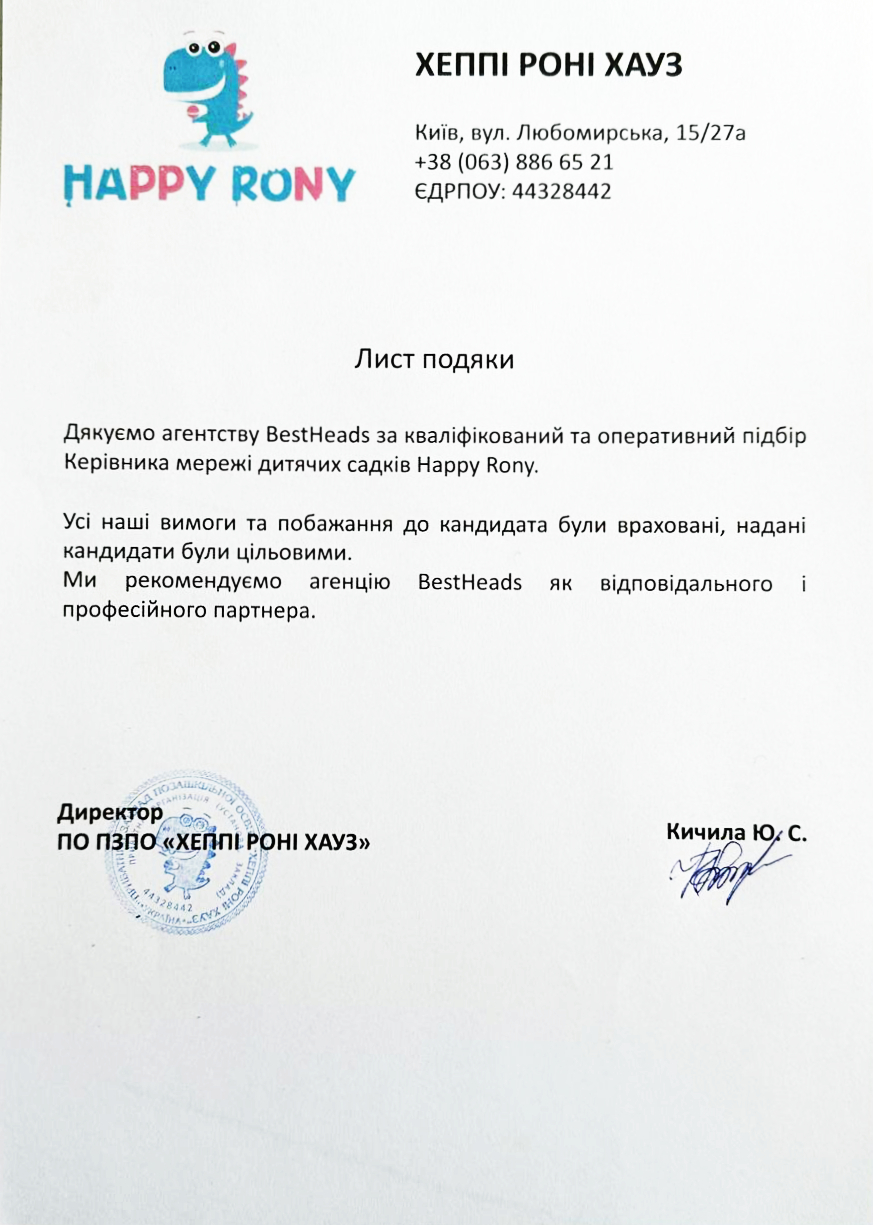
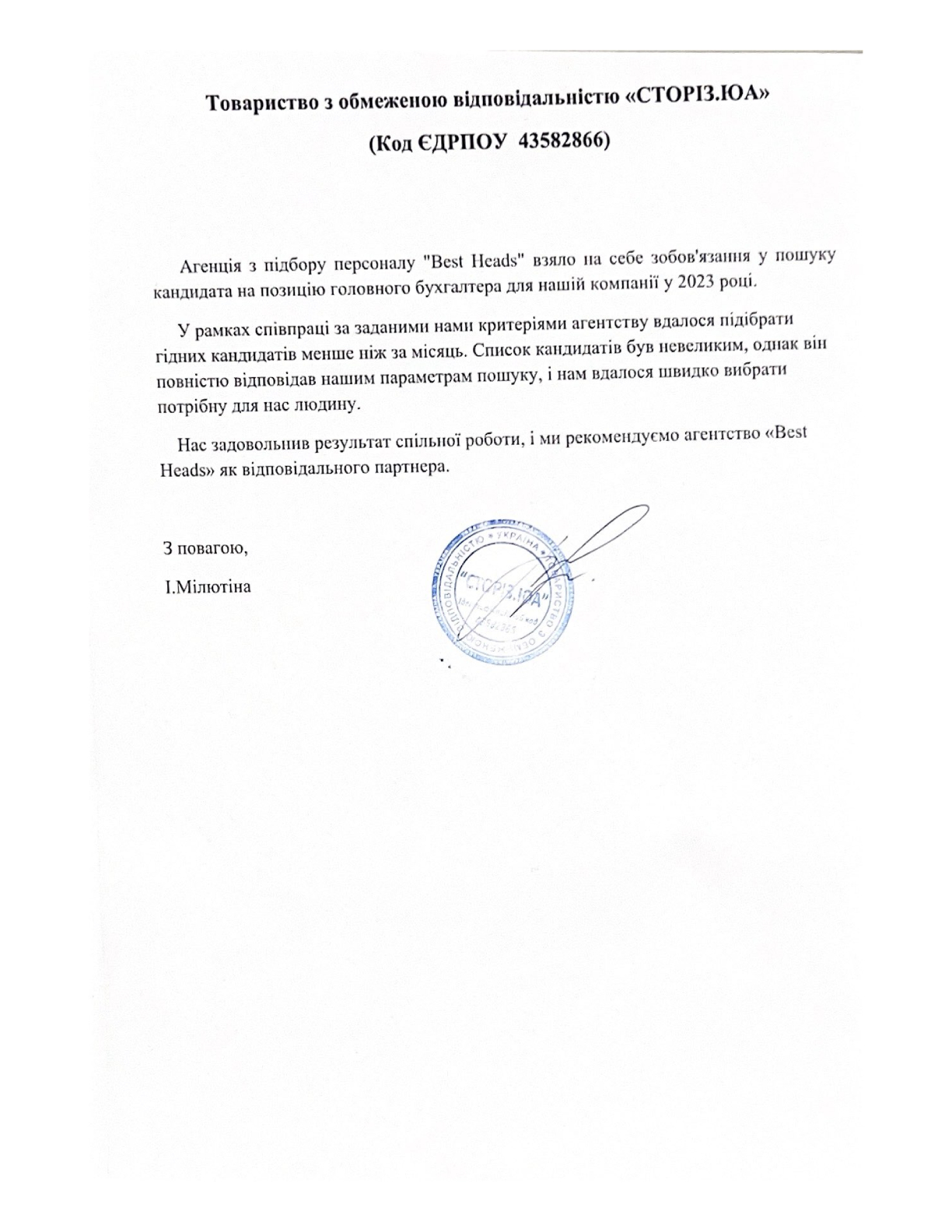
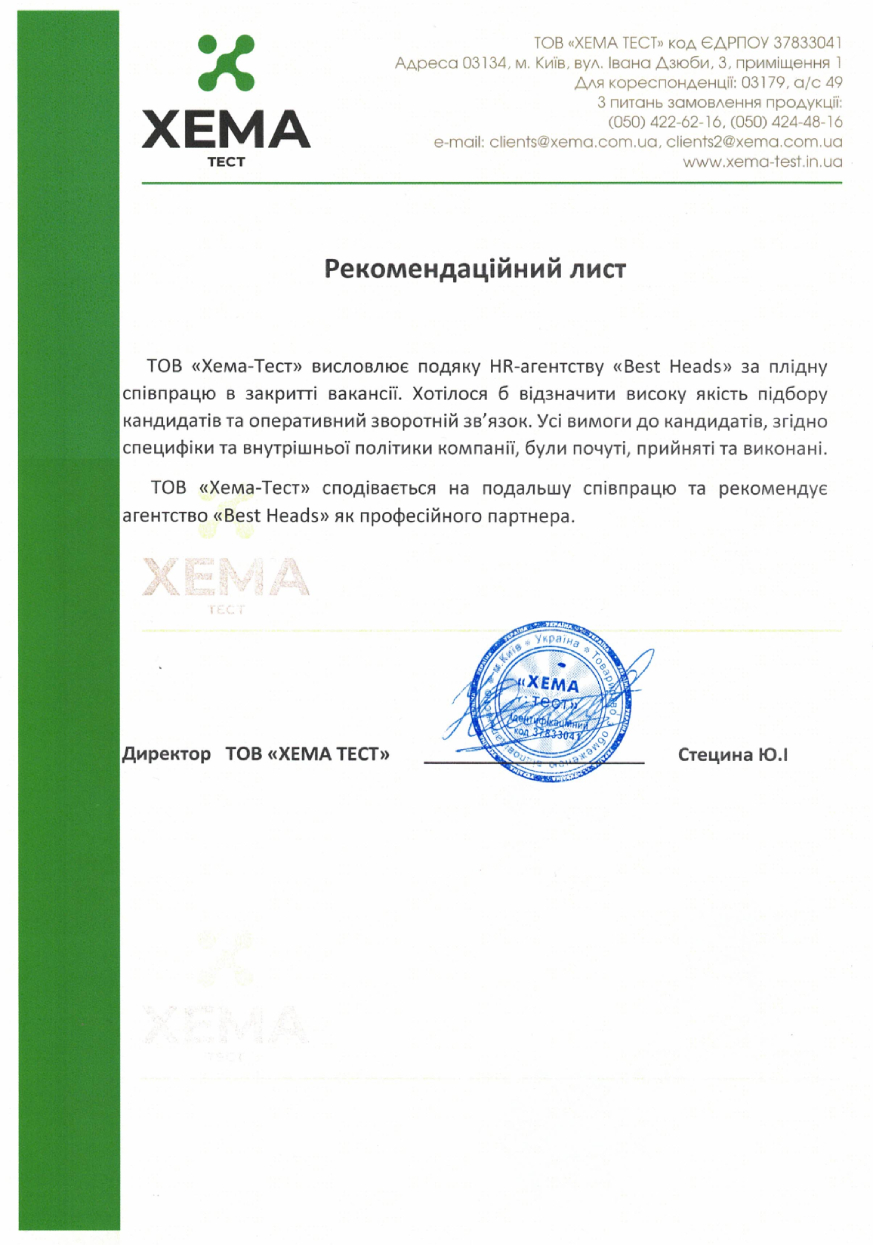
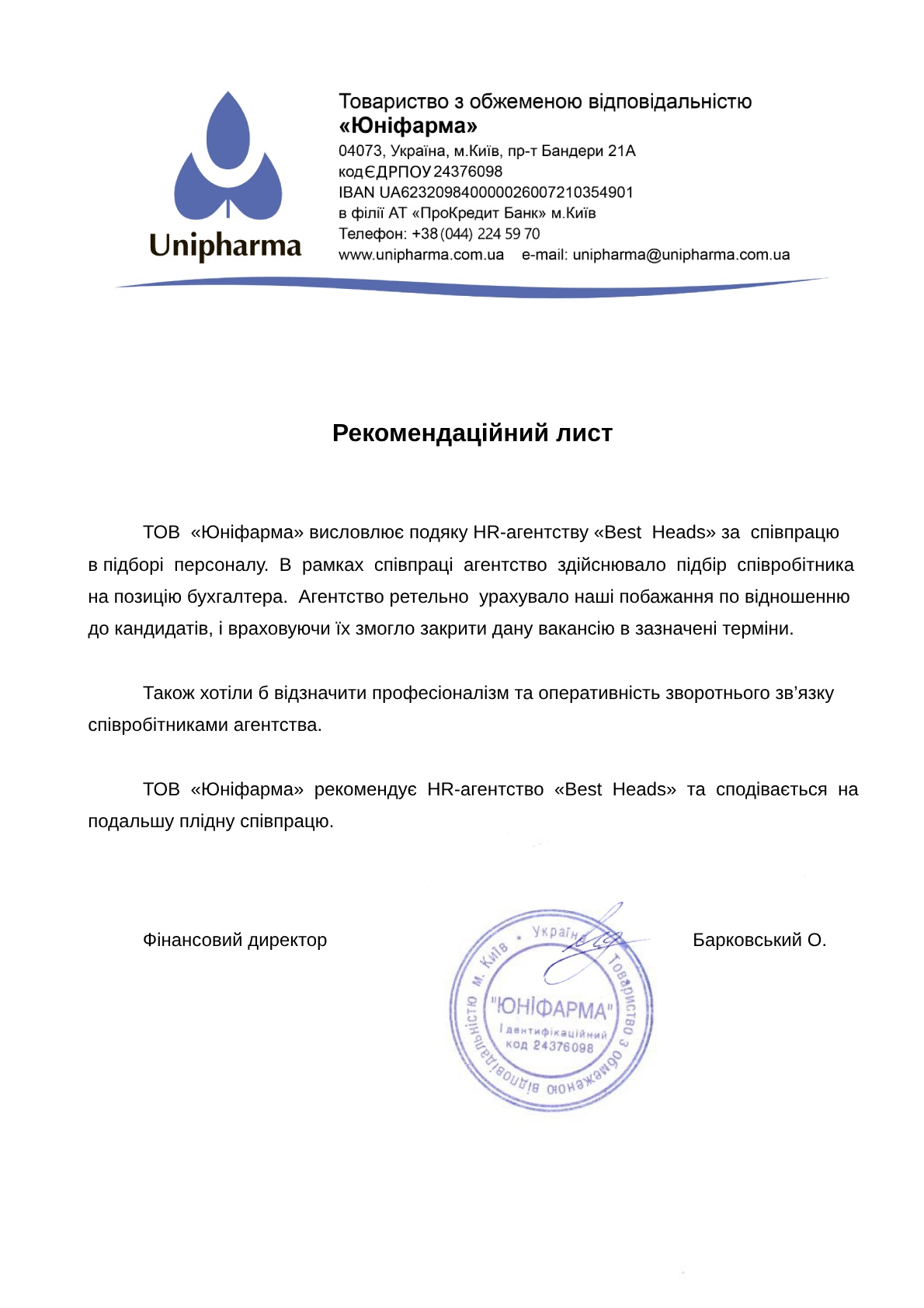
Testimonials from our clients
Industries we specialize in
Every candidate goes through three screening stages before reaching your inbox.
Different stacks close on different curves. Below is what we typically observe, these are operational benchmarks, not commitments.
Intake call to first qualified shortlist:
– C and C++ Embedded Senior: 7 to 10 business days
– Go Senior: 10 to 14 business days
– Python Senior (backend): 5 to 14 business days
– DevOps and SRE Senior: 10 to 14 business days
– Solidity Senior: 14 to 21 business days
– Node.js Middle: 3 to 21 business days
– Unreal Senior: 14 to 21 business days
– Rust Senior: 21 to 28 business days
– Software Architect: 21 to 35 business days
– Engineering Manager: 21 to 35 business days
– CTO and C-level: 35 to 56 business days
Brief to signed offer:
– Senior IC, well-supplied stacks: 25 to 45 days
– Senior IC, narrow stacks (Rust, niche embedded): 45 to 70 days
– Lead, Principal, Architect: 50 to 80 days
– C-level: 70 to 120 days
Faster closes happen but they reflect specific candidate pipelines at specific moments – not a default timeline you should set with your team.
What slows things down:
– Brief that combines two non-overlapping talent pools (e.g. Rust + Solidity + DeFi protocol experience as a single role)
– Salary range below local market median for the stack at the target seniority
– Interview process longer than four rounds – the strongest candidates have multiple offers and drop out of long processes
– Take-home tasks that require more than 4 to 6 hours of work – same dropout effect
– Unclear or shifting role specification after intake
What speeds things up:
– Briefs that match one clear talent pool with realistic adjacencies
– Interview process: technical screening + cultural conversation + offer
– Decision-making within 24-48 hours of each interview
– Equity component disclosed at offer stage, not after
– Direct contact with the hiring manager available to the recruiter, not routed through HR
On rejections and feedback loops. When a candidate gets rejected at a specific interview stage, we ask for the failure reason in writing – not the formal HR debrief, but the engineering team’s actual gap signal. If three rejections cluster around the same gap, the brief needs adjustment: either the seniority bar is calibrated higher than the local market supports at the target salary, or the screening needs to test for something we are currently underweighting. We will surface this proactively after two clustered rejections.
On NDA and confidentiality. Standard practice for crypto, defense tech, and stealth-mode startup hiring: NDAs signed before initial candidate conversations, anonymized briefs during sourcing, named disclosure only after the candidate signs reciprocal NDA. We can run the entire search under sealed-bid conditions if required.
About Us
Frequently Asked Questions
Every candidate goes through three stages before shortlist. First, recruiter screening against the brief – we verify the candidate’s actual experience, seniority calibration, current employment status, and relocation or military registration status where relevant. Second, an English level check on a live call with explicit B1/B2/C1 classification and notes on borderline cases. Third, a motivation and contract-fit conversation covering salary expectation, notice period, contract structure preference (FOP, EOR, direct employment), and any non-negotiables. For clients who want a deeper technical pre-filter before their own engineering team interviews, we offer technical depth screening run by a domain expert from our network – that is a separate service we coordinate on request.
We run multi-role engagements regularly. For team-build scenarios the engagement structure is the same retained model, with parallel searches and a coordinated shortlist cadence across roles. Typical multi-role engagements run 3 to 8 hires concurrently — for example, building out a Web3 protocol team (Solidity Senior, Rust Senior, Smart Contract Auditor, Technical Lead) or scaling a backend organization after a Series A (two Senior Go engineers, a DevOps Senior, an Engineering Manager). Larger team builds beyond 8 concurrent hires we run as a phased program with quarterly milestones rather than a single-sprint engagement. The shortlist cadence and the depth of screening remain consistent across roles — we do not trade quality for parallel volume.
Yes, with adjustments to the standard process. For stealth-mode startups, we run sourcing under an anonymized brief — candidates know the stage, vertical, and technical context but not the company name until after they sign an NDA. For NDA-required engagements (common in defense tech, fintech, and certain crypto contexts), the NDA can be signed before initial screening conversations, before shortlist delivery, or before offer — your call on which gate matters. For security-cleared roles, the Ukrainian regulatory framework is different from US or EU clearance regimes — we can screen for relevant local background factors (military registration status, previous defense-sector experience, family ties to sanctioned jurisdictions) and surface them explicitly in the shortlist, but formal clearance issuance is your company’s process to run.
Yes, at no additional cost. Technical interview rejections are part of the process – we treat them as signal to refine the brief, not as a closed search. The engagement fee covers our work on the role until placement, not per-candidate. After two or three rejections at the same interview stage, we typically request a debrief with your hiring manager to recalibrate. If rejections cluster around the same gap: system design depth, distributed systems experience, language-specific idioms, communication style – the brief usually needs adjustment. Sometimes the seniority bar is calibrated higher than the local market supports at the target salary, sometimes the screening should test for something we are currently underweighting.
Our base engagement covers sourcing, recruiter screening, English check, and motivation/fit interview, we do not run formal technical interviews as part of that. The formal technical interview that decides hiring – system design rounds, live coding, deep architecture sessions is run by your team, because that interview is also a working-relationship check between the candidate and the engineers they will work with. For clients without internal technical interviewing capacity for a specific stack, we offer a separately-priced technical depth screening run by a domain expert from our network. We coordinate the screener and deliver a written assessment, but we do not run the final hiring decision ourselves that separation protects the integrity of your hiring process.